⭐ 4.9/5 · 143 Google Reviews · Chimney Repairs in Burpham
Chimney Repairs in Burpham
Chimney repair specialists in Burpham. Brick chimney stacks on post-war stock — more modest than conservation area properties but failure still common — repointing, lead soaker replacement, pot replacement and partial rebuilds. Cement repointing from the 1990s has cracked and carbonated on most burpham stacks — repointing cycle now due. Free survey, 10-year guarantee.
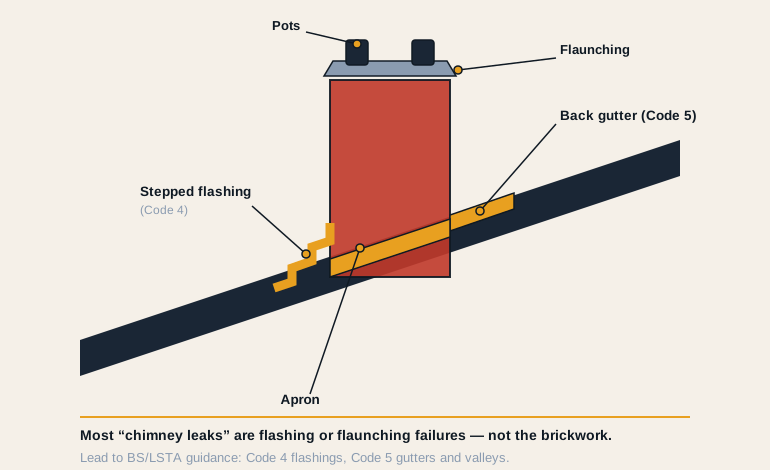
A chimney is the usual suspect behind a leak that seems to come from nowhere — nine times in ten it is the flashing or the pointing, not the pot.
Water tracking down the chimney breast after wind-driven rain
Cracked cement fillets where proper lead soakers should be
Debris packed into the back gutter behind the stack
Open pointing between the upper courses of brick
When it is not the answer: A sound stack with a little open pointing needs a repoint, not a rebuild — we only recommend rebuilding a stack that is genuinely unsafe. Read the full guide.
How the detail works — the same principles we check on every Guildford roof.
In Burpham the pattern we see reflects the local stock: burpham's mix of 1930s semis and later estates has generous plot access; older properties along the London Road corridor need permit-controlled pavement scaffold.
Burpham's 1930s semis carry the classic tall brick stack with cement fillets where a lead soaker should be, and those fillets crack and let water track down the breast; converting them to proper Code 4 stepped lead is the lasting cure. The mature trees along the London Road corridor also drop debris that keeps back gutters blocked.
Access
Scaffold, Skips & Street Access
Chimney work almost always needs scaffold to the stack for safe working; it is itemised and we arrange it. Scaffold is specified for: any work on the stack itself — flashing, pointing, flaunching or rebuild - always itemised in your written quote, never a hidden extra, and we arrange it.
Burpham's mix of 1930s semis and later estates has generous plot access; older properties along the London Road corridor need permit-controlled pavement scaffold. Pavement scaffold and skip permits go through Guildford Borough Council; allow a few working days on streets like Burpham Lane, Weybrook Drive, Orchard Road where space is tight.
Pricing
What Chimney Repairs Costs in Burpham
Job
Typical range
Notes
Flashing repair / re-lead
£400–£950
Scaffold may add
Repoint stack
£350–£750
Lime on period stacks
Re-flaunch & repot
£250–£600
Per stack
Partial stack rebuild
£900–£2,500
By extent
Full stack rebuild
£2,000–£4,500+
Scaffold incl.
What moves the price
Scaffold to the stack (nearly always needed)
Lime vs cement mortar on period property
Height and stack condition
Whether a rebuild or repair is required
Worked example: Renewing the lead apron and back gutter on a chimney serving a 1930s semi in Burpham, plus a lime repoint of the exposed courses: around £820 with scaffold to the stack.
Staged on rebuilds — nothing up front before materials and scaffold are on site. Written VAT invoice for records.
Guarantee
The Guarantee in Plain Terms
The flashings, pointing and flaunching we renew on your stack are guaranteed in writing for ten years; the new lead itself will outlast the guarantee many times over.
What is guaranteed: our labour and workmanship for a full ten years, set out in writing and passing to the next owner if you move.
Materials: tiles, membranes and lead carry their own manufacturer warranties, which sit on top of ours.
What insurance covers instead: sudden storm or impact damage is a claim matter, not a workmanship fault - though we will photograph and document it to help you.
Should anything covered go wrong, we return and make it good at no cost. A guarantee is only worth the willingness to honour it, and we do.
Every job we complete across Burpham and the wider GU1, GU4 area carries the same written 10-year workmanship guarantee.
Good to know
What It Is Like While We Work
Chimney work means a scaffold to the stack for a few days and a little mortar dust below; it is all outside, so your day indoors is largely undisturbed. For external work you need not be in; we simply agree access and a power point beforehand.
We avoid lime pointing and leadwork in frost or heavy rain; jobs are booked to dry windows. Sitting near the Wey floodplain, Burpham properties see valley humidity and autumn gutter loading from mature trees.
✓ NFRC Registered
✓ Fully Insured
✓ 10 Year Guarantee
✓ Free Quotes
✓ No Hidden Costs
✓ Family Run Since 2004
Chimney Repairs — Burpham
Chimney Repairs in Burpham — Repointing, Lead and Pot Specialists
Chimney repair in Burpham is dominated by the brick chimney stacks on post-war stock — more modest than conservation area properties but failure still common. The area's Wey Valley floor north of Guildford — sheltered from direct storm exposure but persistently humid means cement repointing from the 1990s has cracked and carbonated on most Burpham stacks — repointing cycle now due. We carry the right materials — including lime mortar for period properties — and understand the specific failure patterns across Burpham's housing eras.
A complete chimney repair visit in Burpham covers the full stack — not just the obvious failure point. Failed pointing allows water into joints and behind soakers, which can cause internal damp distant from the chimney breast. We photograph the full stack on arrival, assess all elements, and quote for everything that needs attention in one visit. This avoids the pattern of repeated call-outs for the same stack that is common across Burpham.
Chimney Repair Specification for Burpham
Mortar specification matters in Burpham. For properties built before 1920 — brick chimney stacks on post-war stock — more modest than conservation area properties but failure still common — lime mortar is the correct specification. Cement mortar is too rigid for older masonry, cracks within 5–15 years and can cause brick face spalling. Cement repointing from the 1990s has cracked and carbonated on most burpham stacks — repointing cycle now due. We always specify the correct mortar and can provide samples before committing to a repoint.
What's Included
Full chimney stack inspection and assessment
Repointing — lime or cement as appropriate
Lead soaker and flashing replacement
Chimney pot replacement and haunching
Stack rebuilding where required
Flaunching repair and replacement
10-year workmanship guarantee
Typical Costs
Chimney repoint (per stack) £350–£700
Lead soaker replacement (set) £300–£600
Chimney pot replacement £150–£350
Flaunching repair £120–£250
Partial stack rebuild £500–£1,200
Why Burpham Specifically
Why Burpham Matters for Chimney Repairs
Burpham's Wey Valley humidity keeps chimney brickwork damp for extended periods, which drives faster efflorescence (salt deposit formation) on stack faces and more rapid carbonation of mortar joints than on drier elevated locations. The practical effect is that Burpham's post-war chimney stacks — built in OPC mortar — have reached the repointing cycle 5-10 years earlier than equivalent stacks on Guildford's elevated suburbs, and we are currently attending a higher volume of Burpham chimney repoints than the estate's age would typically predict. Properties on Burpham Road and New Inn Lane demonstrate this pattern clearly — call us for a free survey and we will advise on the specification most appropriate for your specific position within Burpham.
We assess all mortar joints, lead soakers and flashings, pot condition and structural integrity. We photograph everything from the ridge.
02
Specification
We specify the correct mortar — lime for pre-1920 properties, OPC where appropriate — and advise on all elements requiring attention.
03
Repair Completed
Repointing, lead replacement and pot work completed in one visit where possible. We avoid unnecessary return trips.
04
10-Year Guarantee
All chimney work carries a written 10-year workmanship guarantee.
Customer Reviews
Chimney Repairs Reviews From Burpham
★★★★★
“Stack repointing — cement had cracked throughout. Lime mortar repoint, new flashing dressed properly. No more water tracking in behind the breast.”
Frank M. · Burpham Road, Burpham
★★★★★
“Lead soaker failure on the chimney — caused bedroom ceiling damp. They stripped the full flashing set, installed new and repointed. Fixed in one visit.”
Elizabeth B. · New Inn Lane, Burpham
★★★★★
“Pot had cracked and was letting water directly into the flue. Replaced the pot, repointed the haunching and inspected the full stack. Complete job.”
For a Burpham chimney, expect roughly £350–£750 to repoint a standard stack and £600–£950 where new lead is renewed at the same time; taller or harder-to-reach stacks cost more because of scaffold. Every quote is written, itemised and free. Around Burpham, streets like Burpham Lane and Weybrook Drive can affect how we access and schedule the work.
Match the mortar to the stack. A period Burpham chimney needs lime — it flexes and breathes with old brick — whereas cement on soft brick causes cracking and spalling within a few winters. Later stacks are fine in cement. We specify the right one on survey. It is a common enquiry from Burpham homeowners given the area's housing mix.
In Burpham the usual culprits are lead flashings and mortar joints that have failed, letting rain in at the junction and tracking down before it appears indoors. A leaning stack, cracked flaunching or a porous pot can also be the source. Our Burpham customers get the same written guarantee and honest pricing whichever way the job goes.
We do — pot renewal and re-flaunching is standard chimney work in Burpham. Where a pot has cracked, lifted or gone we refit or replace it and re-bed it in fresh flaunching, usually while access is already in place. Sitting near the Wey floodplain, Burpham properties see valley humidity and autumn gutter loading from mature trees, so in Burpham we plan for it.
Look for sandy mortar debris below the stack, gaps you can rake out by hand, salt deposits on the brick, and any damp on the breast in the room beneath. If several show together, the pointing has failed and needs attention. In Burpham, sitting near the Wey floodplain, Burpham properties see valley humidity and autumn gutter loading from mature trees.
We would not recommend using the fireplace during the works, and if the survey shows the stack or flue is unsafe you should hold off until it is repaired. After sign-off in Burpham you can use it as normal. On Burpham stock this is shaped by local access — burpham's mix of 1930s semis and later estates has generous plot access; older properties along the London Road corridor need permit-controlled pavement scaffold.
A proper lime repoint on a Burpham stack should give 40–60 years of service; cement mortar far less. We back the workmanship with a written 10-year guarantee, and the Code 4/5 lead we fit lasts for decades. We cover Burpham and the surrounding GU1, GU4 postcodes for exactly this.