Lime vs Cement Mortar for Guildford Properties
Mortar specification is the most important decision in roof repointing and the most commonly got wrong. Portland cement mortar is too rigid for pre-1920 properties — it cracks under the thermal movement and slight structural settlement that all older buildings experience, typically failing completely within 10–20 years. Lime mortar is flexible, breathable and compatible with the original softer brick and masonry of Victorian and Edwardian buildings. For Guildford's 1930s clay tile stock, a moderately hydraulic lime (NHL 3.5 or 5) is the appropriate specification. For post-war concrete tile properties, OPC mortar is correct. We always specify the right mortar for each property.
Ridge Repointing Process in Guildford
Ridge repointing involves carefully lifting the ridge tiles, removing all the old mortar from both the tile bedding and the underlying course of tiles below, and re-bedding the ridge tiles in new mortar. On properties where the ridge tiles are original clay, we handle them carefully to avoid breakage — original clay ridge tiles in good condition are worth preserving rather than replacing with concrete alternatives. We also mechanically fix ridge tiles with screw-fixed clips in addition to mortar bedding, as required by current building standards and as good practice on exposed Guildford locations.
Chimney Repointing in Guildford
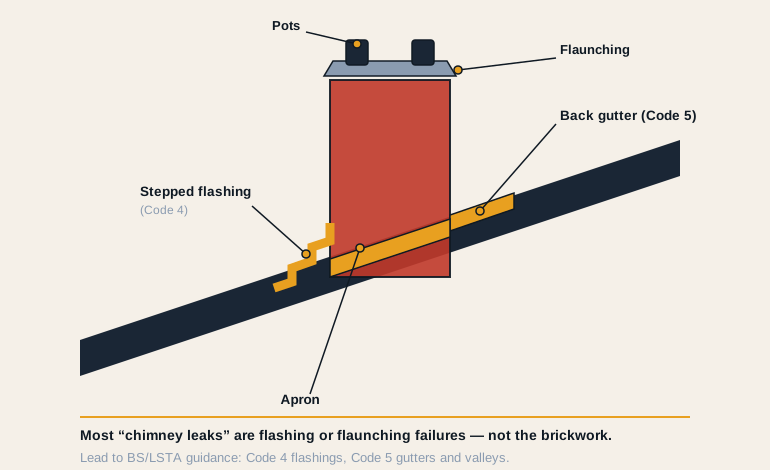
Chimney stack repointing in Guildford requires attention to several elements beyond the obvious pointing joints. We inspect the haunching (mortar bedding around the chimney pot), the flaunching (the sloped mortar cap at the top of the stack), and all lead soakers and flashings as part of every chimney repoint visit. Repointing the stack joints while leaving failed soakers and flashings in place is the most common reason a repointed chimney in Guildford continues to leak. We address all elements in one visit.