Breathable Membrane — Why It Matters for Guildford Properties
The roofing underlay — the membrane between the tiles and the roof structure — is a critical but often overlooked component. Original roofing felt from pre-1990s properties is an impermeable vapour barrier that can trap moisture in the roof structure, leading to batten rot and rafter deterioration in Guildford's humid valley suburbs. Modern breathable membranes (BS 4016 Type 1F equivalent or better) allow moisture vapour to escape from the roof structure while preventing liquid water from entering. We install breathable membrane as standard on all re-roof work and specify the appropriate category for each property and location.
Cold Roof Insulation at Re-Roof
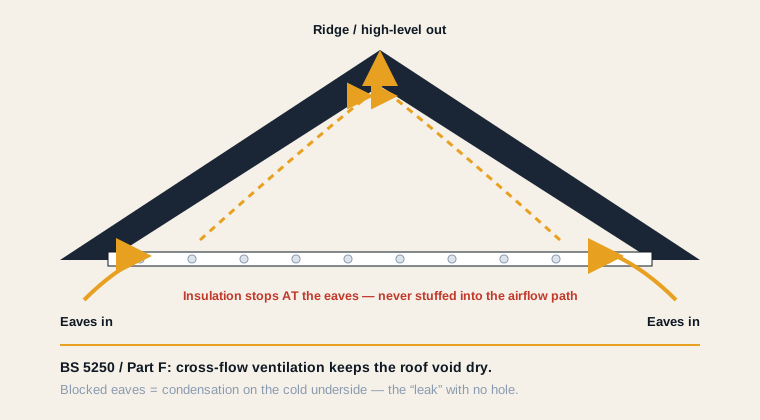
For properties with a cold loft — where the loft floor is insulated and the loft space itself is unheated — re-roof is an opportunity to review the underlay specification and ensure adequate ventilation gaps are maintained. In Guildford's Wey Valley suburbs, where loft spaces tend to run at higher humidity, correctly specified ventilation is particularly important for preventing condensation issues in the roof void. We advise on ventilation requirements during the re-roof survey and ensure new membrane specification is appropriate for the loft use.
Warm Roof Specification for Loft Conversions
For loft conversion spaces where the insulation is within the roof structure rather than at ceiling joist level, correct specification is more complex. Under current building regulations, rafter-level insulation must achieve a U-value of 0.18 W/m²K or better. This typically requires insulation between rafters plus a further layer either below (as a service void) or above the rafters as part of the roof build-up. We work with homeowners and building control to specify the correct build-up and integrate it correctly with the new roof covering during re-roof.