Why GRP is the Right Choice for Most Guildford Flat Roofs
Guildford's climate — damp winters, significant temperature variation between seasons, and the Wey Valley humidity in the lower suburbs — tests flat roofing systems hard. GRP handles these conditions better than felt (which oxidises and cracks under thermal cycling) and better than some early EPDM products that used adhesive bonds that have since failed. The seamless application of GRP means there are no joints to open under thermal movement, which is the single most important characteristic for a long-life flat roof in Guildford's conditions.
GRP Installation — What the Process Involves
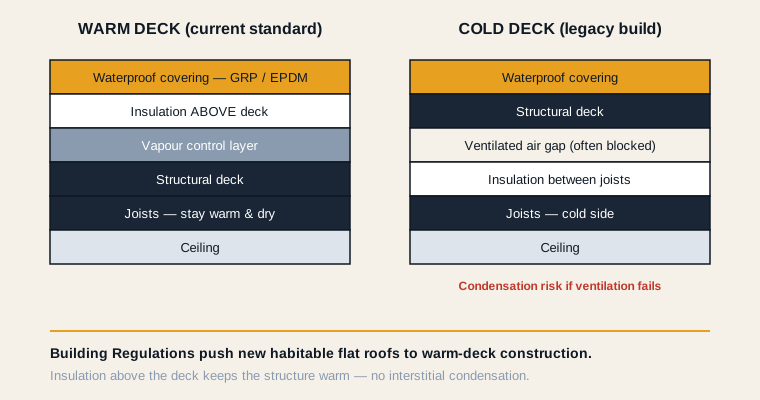
GRP installation begins with the existing deck. We strip the old covering, inspect the OSB or plywood deck boards for rot or delamination, and replace any failed sections. Falls are assessed and corrected if inadequate — a flat roof that ponds water will fail faster than any system specification can prevent. Upstand heights are checked against the minimum 150mm requirement. The new GRP is then applied in two layers — the laminate coat and the topcoat — with glass tissue reinforcement at all joints, upstands and outlets. The system is then tinted to the specified colour and sealed at all lead trim junctions.
GRP vs EPDM for Guildford Properties
Both GRP and EPDM are excellent long-life systems. GRP is our primary choice for most Guildford applications — it is harder, more impact-resistant and more suitable for roofs that need to carry foot traffic. EPDM is specified where the installation environment requires a cold-applied system — for example, where adjacent glazing or sensitive surfaces would be affected by the styrene vapour from GRP application. For Guildford's most humid locations — Bellfields, Burpham, Shalford — we often specify EPDM as it tolerates damp substrates better during installation.